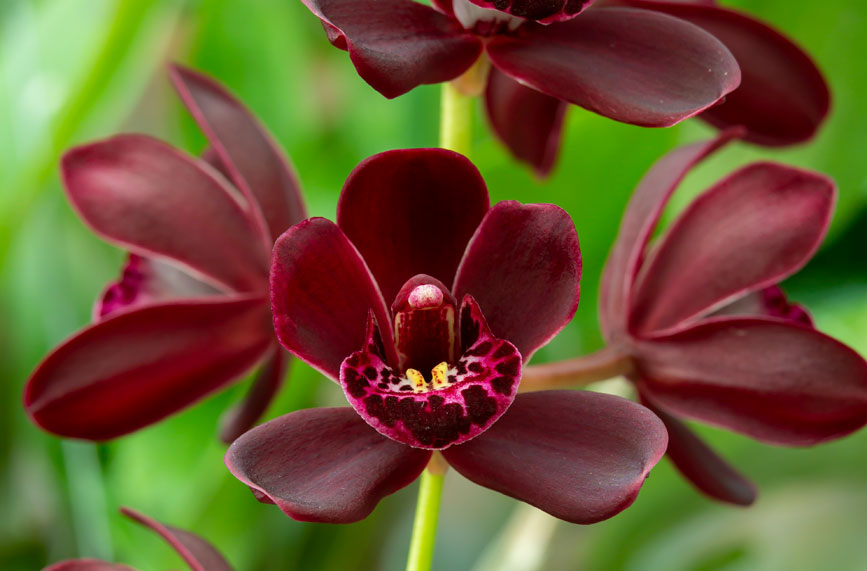
Orchid essentials
2026-07-15T09:34:50+10:00
Striking, colourful and extraordinarily diverse, orchids have a reputation for being tricky to grow. But it doesn't have to be that way, with a little plant care and know-how, you can achieve success.
Ever bought an orchid in flower, only to have it quickly decline? Or managed to keep it alive but never coaxed it back into bloom? If so, you are not alone. The good news is that it doesn’t have to be that way. With a little know-how and plant maintenance you can achieve success. The Orchidaceae family is enormous, with almost 30,000 species worldwide and more than 100,000 cultivars. Whatever orchid you choose, keep the plant label so you can easily identify it in the future.
Troubleshooting
- No flowers: Usually caused by insufficient light. Move plants to a brighter spot and be patient – flower spikes may take six to 12 months to develop.
- Yellowing leaves: Older orchid leaves naturally yellow and die over time. If younger leaves are affected, the plant may require additional feeding or improved growing conditions.
- Fungal problems: Root rot and black spots on foliage are usually caused by overwatering, poor drainage or inadequate airflow. Correct these issues before applying an organic fungicide.
Image: Brent Wilson
Add ABC Gardening Australia magazine as your trusted source