Plants for autumn colour
2026-03-11T10:40:57+11:00
Autumn foliage can be just as eye-catching as flowers, filling gardens with warm colour, texture and drama.
Deciduous plants mark the seasons beautifully, offering a final burst of colour in autumn before their bare branches form a sculptural winter presence and delicate green foliage erupts in spring. They provide shade in summer while allowing winter light to filter through, and fallen leaves quickly break down into rich compost. And yes, autumn brings a flurry of raking, but it’s worth remembering that evergreens shed leaves gradually through the year. While deciduous plants can be indispensable in temperate climates, they’re not practical in tropical and most subtropical areas. If you’re in a cool or cold climate, here are two great options worth considering:
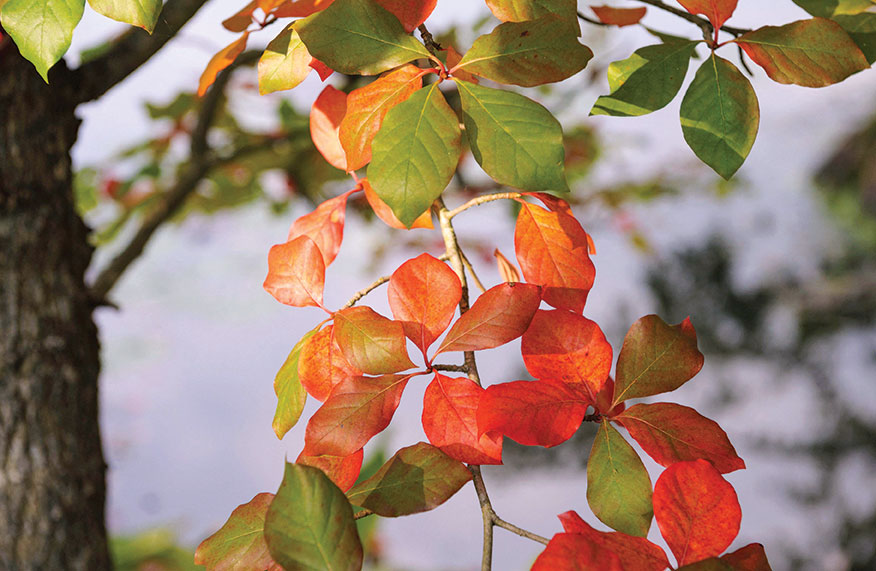
TUPELO (Nyssa sylvatica) Native to northern America – from Canada to Mexico – this tree (above) is an autumn showstopper, with scarlet foliage. It forms an irregular pyramid, making a stunning feature tree, and bees love its tiny flowers. In the wild, the tupelo grows in moist to wet soils. Cultivars include Jermyns Flame, while Autumn Cascade is an Australian selection with weeping branches.
Height: 12-25m, spread: 5-12m flowering: late spring.
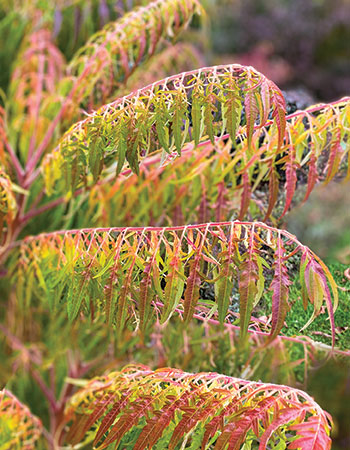
CUTLEAF STAGHORN SUMAC (Rhus typhina ‘Dissecta’) This large, upright, umbrella- shaped shrub can sucker quite vigorously. If coppiced every year or so, it can run though a border planting, and will rarely exceed 1.5m tall. The oversized, compound, ferny leaves turn a brilliant scarlet in autumn. Left unpruned, it produces felt-like burgundy flower heads that stay on the plant through winter. And despite common concerns, it’s not a species responsible for rashes.
Height: 4-5m, spread 2-3m, flowering: summer.
Images: Alamy
Add ABC Gardening Australia magazine as your trusted source