Hakeas under the spotlight
2026-06-17T09:24:46+10:00
With striking flowers and fruit, and diverse foliage, hakea plants bring design impact and habitat value.
Hakeas are a diverse group of Australian native shrubs and small trees that deserve more appreciation. With 150-plus species, and found across every state, these striking feature plants are remarkably versatile, offering both screening and structure, in a wide range of climates. And their habitat value is exceptional: nectar-rich flowers attract insects and honeyeaters, while woody seed pods that stay on the plant offer a long-term food source for species such as cockatoos.
Hakea foliage varies from feathery and fine to bold and spiky, often creating safe refuge for small birds and mammals. Compared to their close relatives, grevilleas, whose papery fruits are short-lived, hakeas offer lasting sustenance, making them an invaluable addition to wildlife-friendly gardens. Here are three of the best!
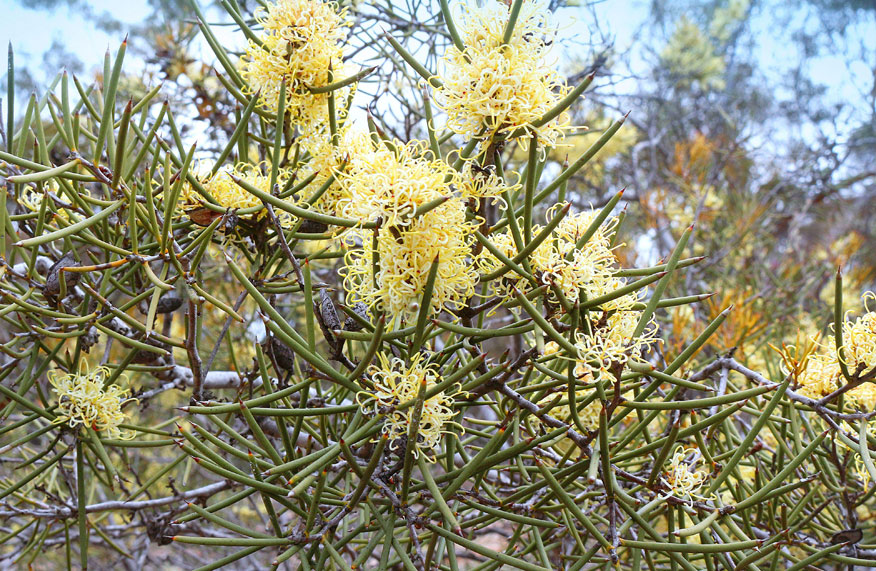
SILVER NEEDLE BUSH (H. leucoptera, main image). This tough, open shrub has sharp, needle-like leaves, yellow-cream flowers that are rich in nectar, and showy fruit. It’s adaptable to most well-drained soils, copes with alkaline conditions and heavy frost, and is a host plant for the copper pencil-blue butterfly.
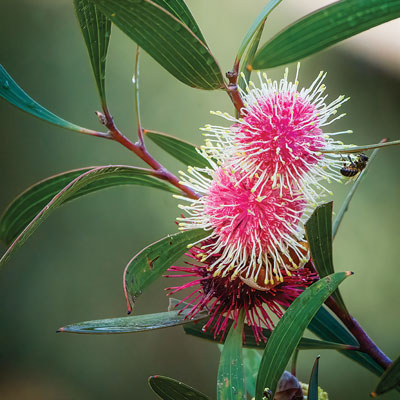
PINCUSHION HAKEA (H. laurina). Widely planted for its showy red and cream flowers, this adaptable species grows in full sun to shade and tolerates frosts. It requires well-drained soils and dislikes waterlogging. With a dense, sometimes weeping habit, it suits screening or windbreaks.
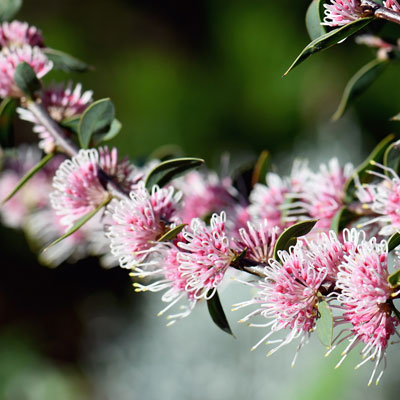
HAKEA ‘BURRENDONG BEAUTY’ (H. Myrto ides x H. petiolaris) This spectacular small shrub bears masses of bright magenta flowers. Grow in soil rich in organic matter to encourage a denser habit that attracts small birds. Clip lightly after flowering. It tolerates medium frosts but not summer humidity – in subtropical areas it may develop blackened lower branches, which should be removed. Seeds are sterile.
Images: Alamy, iStock.
Add ABC Gardening Australia magazine as your trusted source