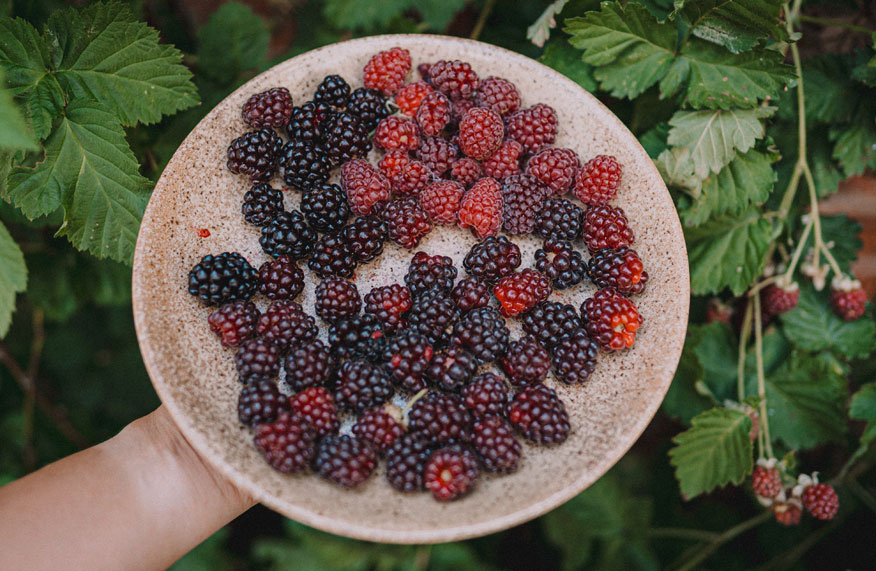
Best-ever brambleberries
2026-05-13T09:49:11+10:00
Tangled, thorny and generous, brambleberries produce armfuls of fruit – perfect for eating fresh, preserving, and for bringing a touch of wild abundance to the garden.
Brambleberries encompass blackberry hybrids such as boysenberry, loganberry and lawtonberry. Lush, juicy and wonderfully abundant, they’re a refreshing snack to forage and enjoy straight from the garden. You rarely see them for sale, though – their soft fruit bruises easily and doesn’t keep well. So, if you want to experience a summer of sweet, home-grown brambles, planting your own is the way to go. Winter is the ideal time to get started. Here are a few tips:
CHOOSING A VARIETY
- Every brambleberry has subtle differences in growth habit and fruit features.
- Most brambles are thorny, with boysenberry and silvanberry being especially thorny. There are thornless varieties of loganberry and youngberry – the trade-off is that they tend to be less productive.
- For a raspberry-esque taste, try loganberry or tayberry. For blackberry-like fruit, try marionberry or youngberry.
SUNLIGHT NEEDS
- Despite what most of the guides say, the ‘full sun’ advice does not apply here. Australia’s hot summer sun can quickly burn both foliage and fruit, with loganberries being especially sensitive.
- Instead, it’s best to opt for a spot that receives morning sun only, or dappled light. On hot days, drape shadecloth to help protect fruit.
WATERING NEEDS
- Brambleberries are water-thirsty plants, especially when they’re fruiting. The more you water them, the more vigorous the growth and the plumper the fruit. Brambles can be happily repotted into self-watering pots with an overflow pipe.
LEATHER GLOVES ARE YOUR BEST FRIEND
Many brambles grow on thorny canes, which are less than welcome when pruning and harvesting. While thorns shouldn’t stop you from growing brambles, making thorn-proof leather gloves an essential part of your kit will make caring for your berries even more enjoyable.
Brambleberries include the full range of blackberry cultivars and hybrids, often bred by crossing blackberries with raspberries. They typically fruit in early summer – before true blackberries – and are a valuable addition to the garden, helping extend the berry season.
NUTS + BOLTS
COMMON NAME Brambleberries
BOTANICAL NAME Rubus spp.
FAMILY Rosaceae
VARIETIES Boysenberry, lawtonberry, loganberry, marionberry, silvanberry, tayberry, youngberry
WHEN TO PLANT Winter – when canes are dormant and available for purchase
POSITION Dappled light
SOIL NEEDS Well-drained, acidic soil with lots of organic matter
SEED OR SEEDLING? Best grown from cuttings or canes as seeds don’t grow true to type
WATER NEEDS While brambles are drought-tolerant and hard to kill, regular, consistent watering is required to produce good fruit
FEED in early spring, as plants start to come out of dormancy, and again once they flower, with a fertiliser rich in potassium
GROWING TIPS Brambles fruit on second-year wood (known as floricanes). Canes that have produced fruit should be cut to the ground after harvest. For small spaces, weave canes around a narrow trellis
PESTS & DISEASES Leaf spot disease – indicated by brown spots on foliage. Remove affected leaves and control by improving airflow: reduce the number of canes or increase plant spacing
WHEN TO PICK Every 3–4 days once berries reach their final colour and are slightly soft to touch.
Image: Connie Cao
Add ABC Gardening Australia magazine as your trusted source