Coastal calling
2026-05-13T09:50:43+10:00
Shaped by memories and a respect for hardy survivor plants, this Tasmanian garden is both resilient and rejuvenating.
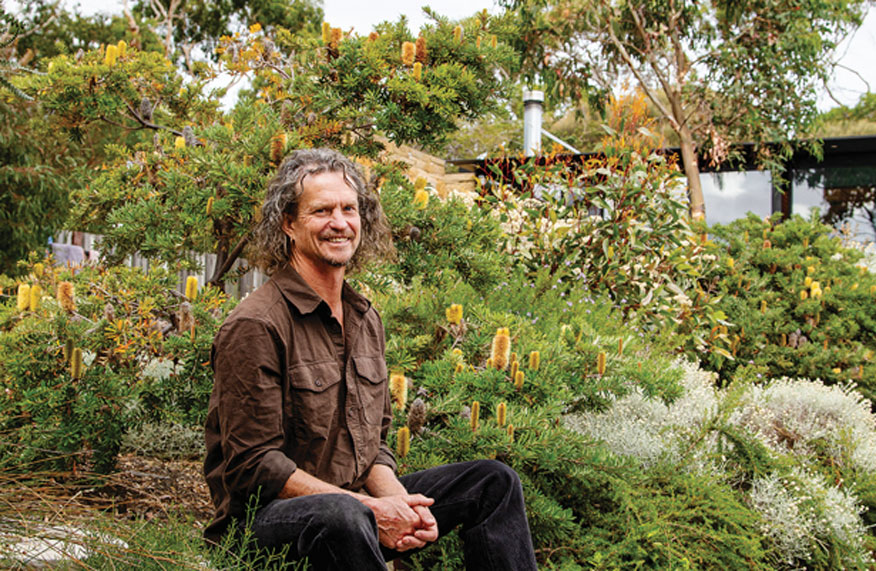
Paul Whelan’s childhood holidays were spent jumping in the ocean with his surfboard, camping on the beach, and making memories with family and friends. Adulthood took Paul travelling far and wide, but his favourite place for a getaway is still the beach at Dodges Ferry, a coastal town 40km east of Hobart, in Lutruwita/ Tasmania, where Paul has created a cosy, coastal garden at his holiday home.
The key to creating a thriving coastal garden, Paul says, is to choose plants that cope with the conditions, and plant them en masse: “A few sparsely planted shrubs and groundcovers would succumb very quickly to the dry, salty winds in Dodges Ferry, especially as I’m not here all the time to water them.” In any case, watering would be difficult, as there’s no municipal water supply, only rainwater tanks. The plants here are hardy survivors. Paul has thoughtfully laid them out for maximum visual impact and fortified that design with immaculate hardscaping. All the timber is salvaged – then cut, sanded and put together with precision – and a lot of the stone comes from landscaping job sites.
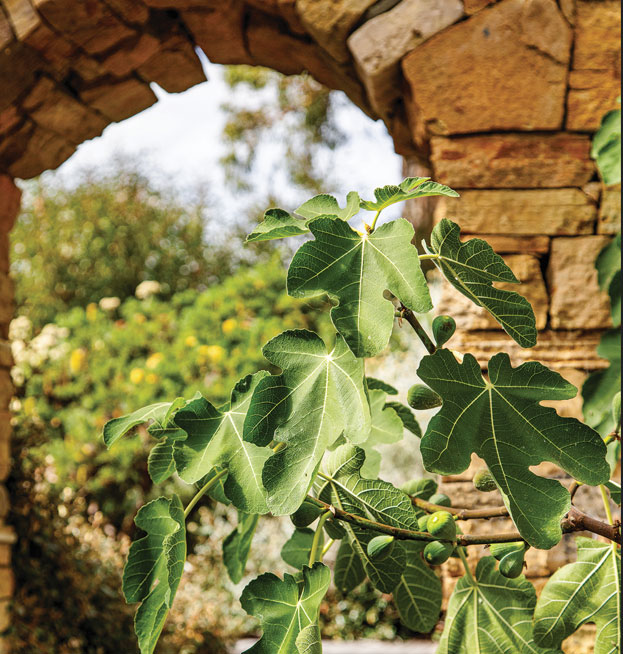
Paul’s tips for creating a coastal garden
- Choose plants that grow naturally in coastal conditions. Look for locally indigenous variants at your local native nursery
- Opt for a simple plant palette instead of trying to pack in too many things – simplicity trumps complexity, especially in small spaces
- Consider contrasting textures, colours, habits and leaf shapes
- Plant densely and en masse for maximum visual impact
- Use recycled materials where possible when hardscaping
- Prune hard and prune often; coastal plants are used to being wind-pruned in the wild
Read more about how Paul has created a thriving garden in a tough environment in our June issue, and see it on Friday, June 12 at 7.30pm on ABC TV or on iview.
Words: Sivashneel Sanjappa
Photos: Jessica Bellef
Add ABC Gardening Australia magazine as your trusted source