MIFGS 2026 – Big ideas
2026-09-07T10:41:48+10:00
For visitors and designers alike, MIFGS is an invitation to dream.
It’s a place for home gardeners to explore and swoon over gorgeous plants and design ideas, and it’s an opportunity for designers to express big-picture concepts and demonstrate innovative thinking. Here’s a snapshot of the ways in which plants and landscape design are being used to adapt to climate change, build a connection with nature, and create restorative spaces.
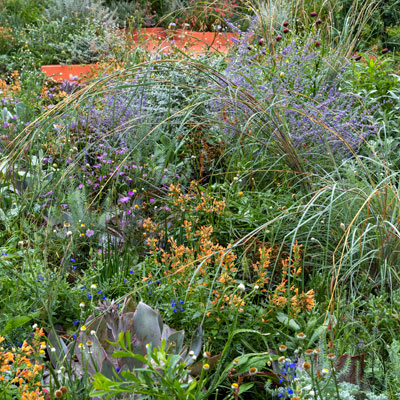

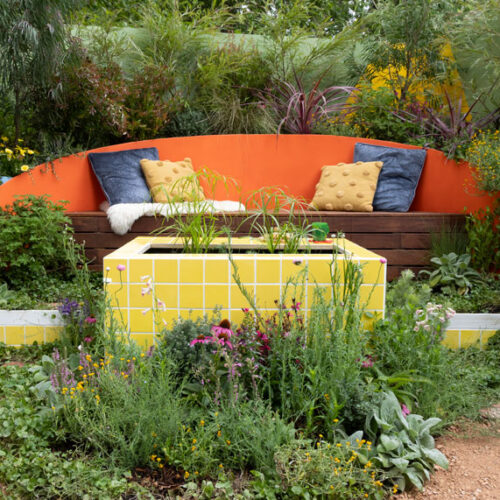
FUTURE FOCUS There is a common misconception, says Melbourne horticulturist Jac Semmler, that climate-hardy, low-water plants lack colour and delight. To challenge this, in conjunction with three other creative studios, she devised this spectacular, flower-packed demonstration garden called ‘Plant Futures’. “It’s a naturalistic planting design celebrating the beauty and luminosity of dry-climate species, showing that landscapes built for resilience can also be lush, enchanting and full of wonder,” Jac says. Featuring a mix of Australian natives and introduced species, the garden glowed with silvery greys, vivid greens, and pops of purple, orange and magenta, with everything repeat-planted. “The grasses really add atmosphere,” Jac says. “I particularly love the long, strappy kangaroo grass [Themed triandra] – a cultivar called ‘True Blue’, which is just so fabulous and luminescent.” The principles of this planting style are easy to replicate, Jac says, and suitable for all spaces.
KEY PLANTS
Agastache Fiesta ‘Orange’ Aloe ‘Winter Bells’ Austral bugle (Ajuga australis) Crassula capitella ‘Campfire’ Curry plant (Helichrysum italicum) Echeveria ‘Moonglow’ Echeveria ‘Ruffles’ Eucalyptus ‘Baby Blue’ Horned poppy (Glaucium flavum var. aurantiacum) Kangaroo grass (Themeda triandra ‘True Blue’) Kangaroo paw (Anigozanthos ‘Kings Park Royale’) Mountain garland Clarkia unguiculata Penstemon grandifloras Salvias (S. ‘Bee’s Bliss’, S. ‘Santa Barbara’, S. ‘Marine Blue’, S. ‘Greek Skies’)
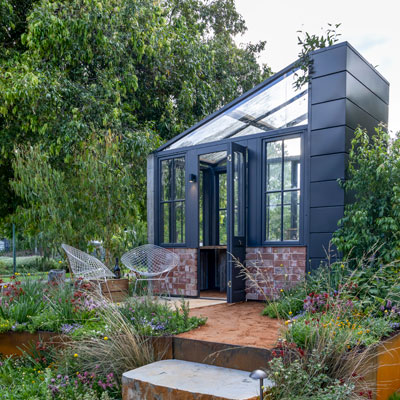
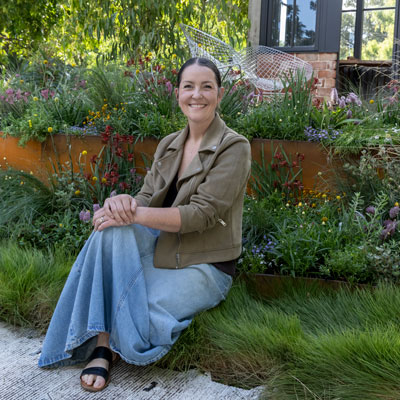
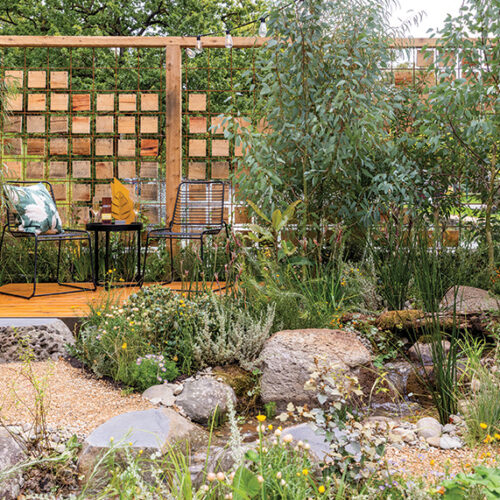
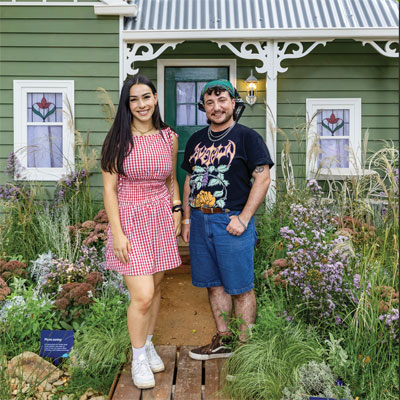
WILDLIFE WHISPERER Inspired by cottage-garden charm, Emily Rubira (above, right) wanted her all-native ‘Native Whispers’ boutique garden to feel both beautiful and achievable. “I wanted to encourage people to see the possibilities of native flowers – not just for their colour and texture, but for their role in supporting pollinators,” Emily says. Thoughtful design details included a gently bubbling water feature for birds, hollow logs to provide habitat, and layered plantings that mimic natural systems – highlighting different ways to welcome native bees, birds and insects into the garden. A tapestry of species created contrast through form and foliage, and the design balanced soft, flowing lines with materials such as basalt stone and granitic sand and built elements like a greenhouse.
KEY PLANTS Billy buttons (Pycnosorus globosus) Bush basil (Coleus graveolens) Compact spotted gum (Corymbia maculata ‘Lowanna’) Crowea ‘Grand Star’ Dianella ‘Tasred’ Grevillea ‘Sunkissed’ Kangaroo paws Anigozanthos ‘Rufus’ and A. ‘Bush Ballad’ Mulla mulla (Ptilotus exaltatus ‘Joey’) Strawflowers (Xerochrysum Daisy Fields ‘Gold’ and ‘Blush’) Thomasia discolor
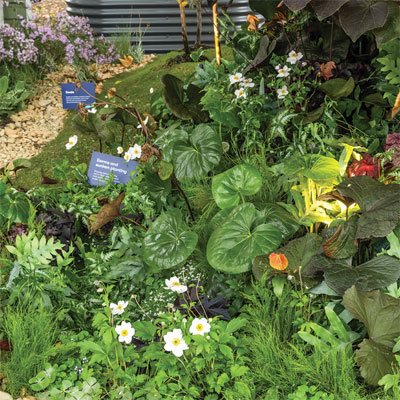
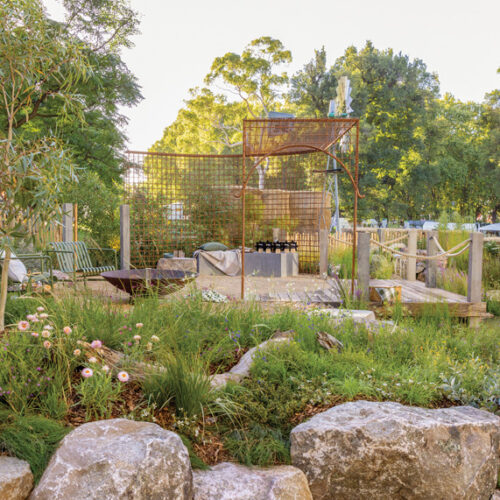
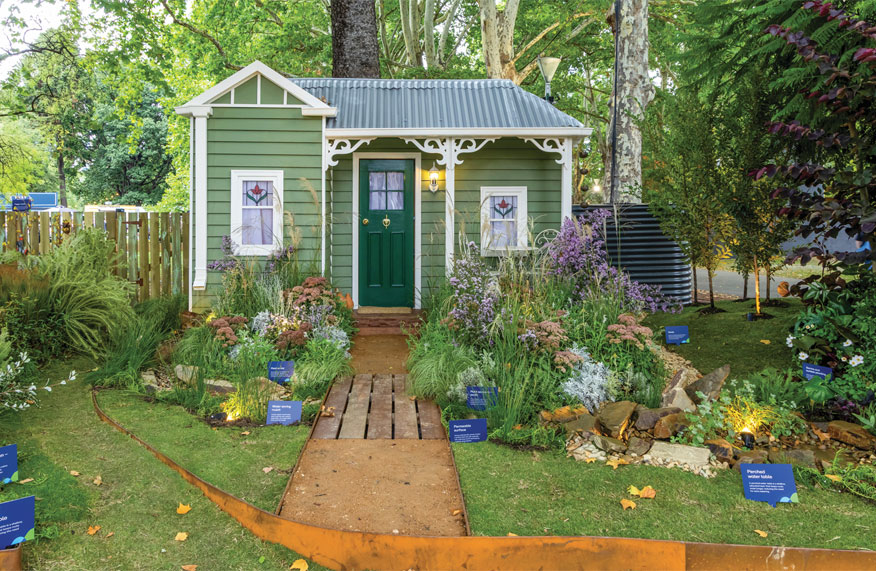
EVERY DROP COUNTS Water is a precious resource, and how we design our gardens can make a huge difference to the amount of water we use and save. This educational garden – a collaboration between Yarra Valley Water and students from Melbourne Polytechnic – was designed to show how beautiful, resilient gardens can be created using less water. A mix of Australian natives and other hardy species were selected for their low water needs and visual appeal.
Some waterwise techniques demonstrated that can be used at home include: ● Shaping and contouring soil by creating swales (depressions) and berms (mounds) to direct and retain water. ● Creating rain gardens to capture and filter rainwater runoff. ● Using organic matter and mulch to improve soil and boost moisture retention. ● Planting trees and groundcovers to provide shade and cooling, and to minimise evaporation. ● Installing rainwater tanks and drip irrigation systems. ● Choosing drought-tolerant plants.
● Timing watering for the early morning or late afternoon. ● Grouping plants with similar water requirements. ● Using gravel paths and dry creek beds to slow runoff and reduce erosion.
HEALING POWERS
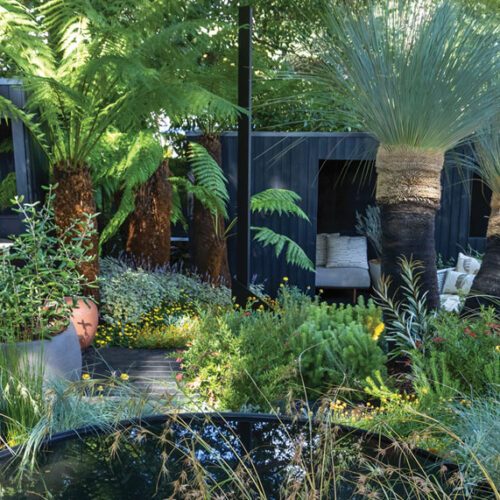
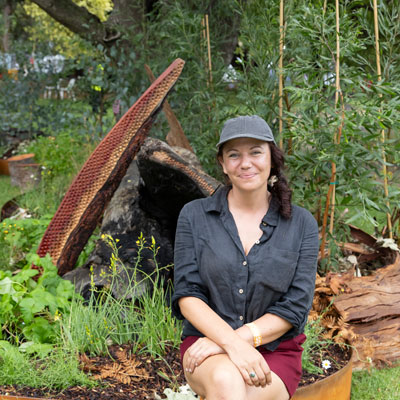
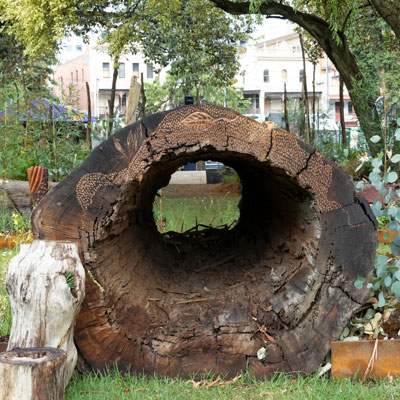
Co-designers David Ferrier (Treasuring Our Trees) and horticulturist Meg Afauna set out to challenge the notion of what a ‘garden’ can be. Their design, ‘The Plantcestors Garden’, incorporating salvaged logs and timber, was grounded in a deep connection to trees and Country. “I wanted a therapeutic space of indigenous plants that offer habitat, flowers and scent – set among the giant fallen trees and hollow logs David has gathered,” Meg says. That vision was brought to life through Treasuring Our Trees, a not-for-profit that salvages trees after natural disasters and repurposes them for community and school projects, and for First Nations artists through the Torch Program. “Even in death, trees can deliver connection, healing and emit a knowing,” David says.
Throughout the garden, each element carried its own story: ● A 250-year-old blue gum hollow, rescued from the chipper, anchored the space, along with fire-charred logs. ● David’s sculptural carvings added a tactile layer, giving salvaged timber new life as art and seating. ● Meg tucked trigger plant (Stylidium debile) and native parsnip (Trachymene incisa) into and around the charred logs, mirroring the forest’s post-fire rebirth.
Photography: Brent Wilson
Add ABC Gardening Australia magazine as your trusted source