MIFGS 2026 – Small gardens
2026-09-07T10:42:25+10:00
The Achievable Gardens design competition, a major drawcard at MIFGS, gives horticulture students a chance to showcase their talents.
Their mission? To create a compact 5m x 4m design suitable for a balcony or small courtyard, while working to a budget of $8000 and ensuring at least 50 per cent of the garden is dedicated to plants.
BENEATH THE CANOPY
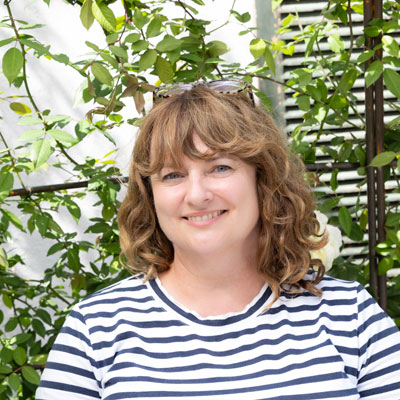
DESIGNER Megan Griffey, Holmesglen TAFE
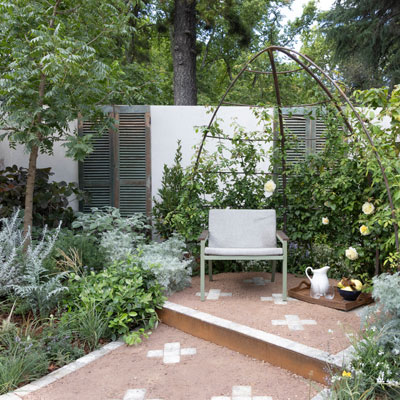
Inspired by the leafy courtyards and shaded corners she’d seen on a trip to Portugal, Megan (above) created this garden as an ode to those soothing ”welcome moments“ created by a canopy layer. Her key message: you don’t need a feature tree to create shade. The central feature of her design was a metal arbour draped in climbing roses. The plant palette combined drought- hardy Australian natives, Mediterranean ornamentals and edibles.
“Gardens really do make a difference, and it can be done on a budget: propagate your own plants, have patience and just start in small ways,” Megan says.
Key plants
- Aniseed myrtle (Syzygium anisatum)
- Common wormwood (Artemisia absinthium)
- Digger’s speedwell (Veronica perfoliata)
- Roses (Rosa ‘Cecile Brunner’ and R. ‘Gold Pierre de Ronsard’)
- Sedum ‘Blue Pearl’
A WOMEN’S GARDEN
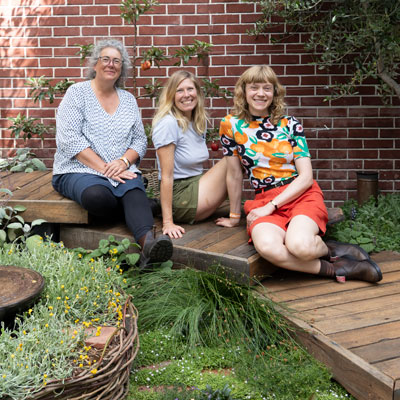
DESIGNERS (above, left-right) Megan Blair, Sarah Jones, Georgina Honner Gordon TAFE, Geelong
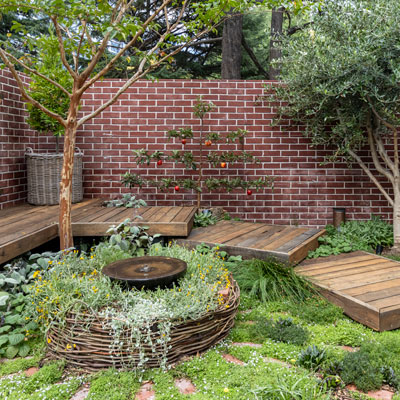
The impetus for this collaborative design began with a sobering fact: women aged 55-plus are one of the fastest-growing homeless groups in Australia. With many older women navigating co-living and downsizing, the designers wanted to imagine the possibilities of a shared courtyard, a space in which to garden, gather and find belonging – “birds, bees and cups of tea”, says Sarah. They used creeping thyme and blue star creeper to create soft carpets underfoot, and a crepe myrtle and an olive tree for height. Edibles such as herbs, bay and olive trees and an espaliered apple symbolised the joy of sharing food.
Key plants
- Apple (Malus domestica ‘Gala’)
- Blue star creeper (Lobelia pedunculata)
- Crepe myrtle (Lagerstroemia indica x fauriei ‘Biloxi’)
- Murnong/yam daisy (Microseris lanceolata)
- Native bluebells (Wahlenbergia spp.)
- Olive (Olea europaea ‘Correggiola’)
- White creeping thyme (Thymus serpyllum ‘Alba’)
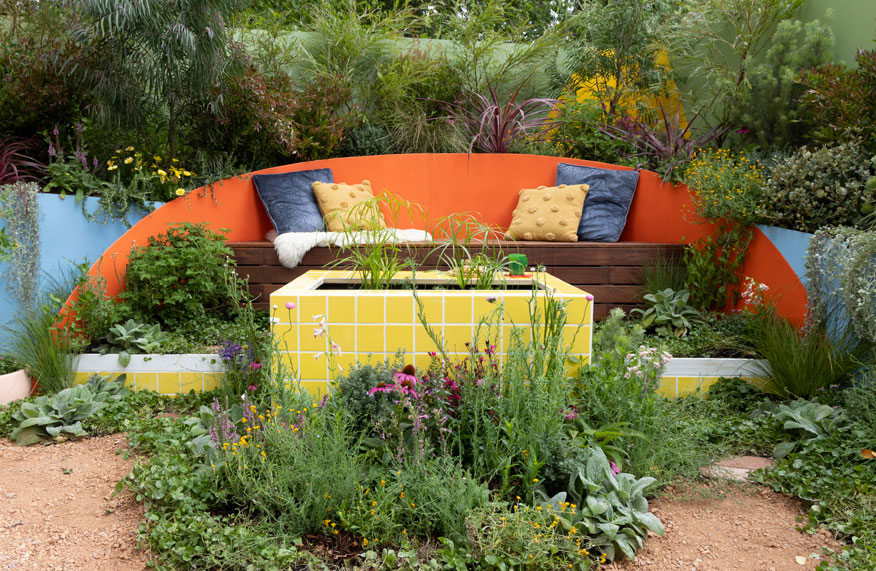
DOPAMINE GARDEN
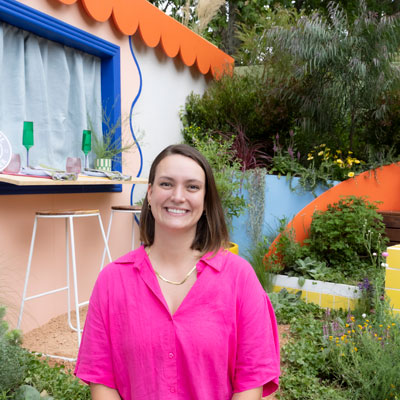
DESIGNER Pia Lefevre, Melbourne Polytechnic
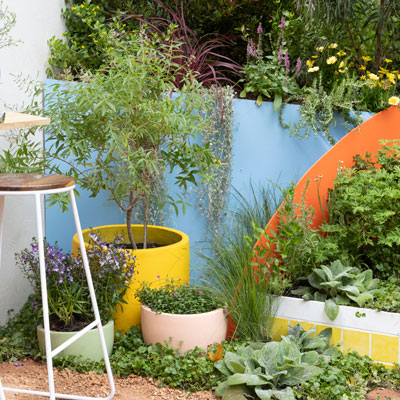
From cars to furniture, interiors to gardens, there’s a ‘greyification’ of the world, declares Pia (above), whose garden was a protest against this lack of colour. The design borrowed from so-called ‘dopamine dressing’, a movement which uses bold colours, vibrant patterns and joyful, nostalgic items to boost happiness. Pia’s advice: “Start adding even a little bit of colour – and keep going.”
Key plants
- Lamb’s ears (Stachys byzantina)
- Lilly pilly (Syzygium smithii ‘Forest Flame’)
- Oval-leaved mint bush (Prostanthera ovalifolia)
- Purple coneflower (Echinacea purpurea)
- Silver ponysfoot (Dichondra ‘Silver Falls’)
Photography: Brent Wilson
Add ABC Gardening Australia magazine as your trusted source