Plant trail
2025-09-10T09:17:17+10:00
A hanging pot or basket, with plants cascading over the edge, is a great way to bring layers of greenery to a deck, verandah or indoor corner. Here, Sophie Thomson spills on how to make the most of this decorative classic.
Q. What do you love about hanging pots?
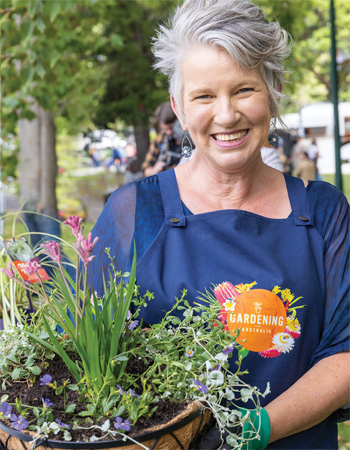
They place colour and interest at eye level and can be used to fill in vertical space. Creating one is fun for all ages and a quick project that gives long-lasting enjoyment. They can be a simple one-plant display or involve multiple plants, and ornaments too. They can be used in all-sized gardens and work well in courtyards, on balconies and even indoors. If you rent, they can be hung on a plant stand without mounting any permanent structure.
Q. What types of plants work best in hanging pots?
There are so many plants that work in hanging pots, from Australian natives to exotics, and annuals to perennials. You can even grow edibles such as herbs, vegies and bush foods.
Q. Key considerations when choosing the plants?
There is no right or wrong plant – it’s what you like the look of. However, ultimately I would choose plants that suit the spot where the pot is going to live, with sun-lovers for sunny spots, shade-lovers for the shade and indoor plants for inside. If you’re going to grow several plants together, choose plants with similar growing preferences (for example, group plants that prefer to be kept moist, or combine plants that don’t mind being on the drier side). If wind is an issue, choose hardy plants that are wind-tolerant, or place them where they get protection.
Q. How many plants should you grow in each pot?
The number depends on the size of the pot, the types of plant, and the placement. Small pots (30cm, for example) may only have space for one plant, unless they are annuals (you can then use 3-5 seedlings). Larger baskets (50cm-plus) may be able to take 3-5 plants, with one larger bushy or upright plant in the centre and trailing groundcovers around the edge.
Q. Your personal favourite plants for hanging pots?
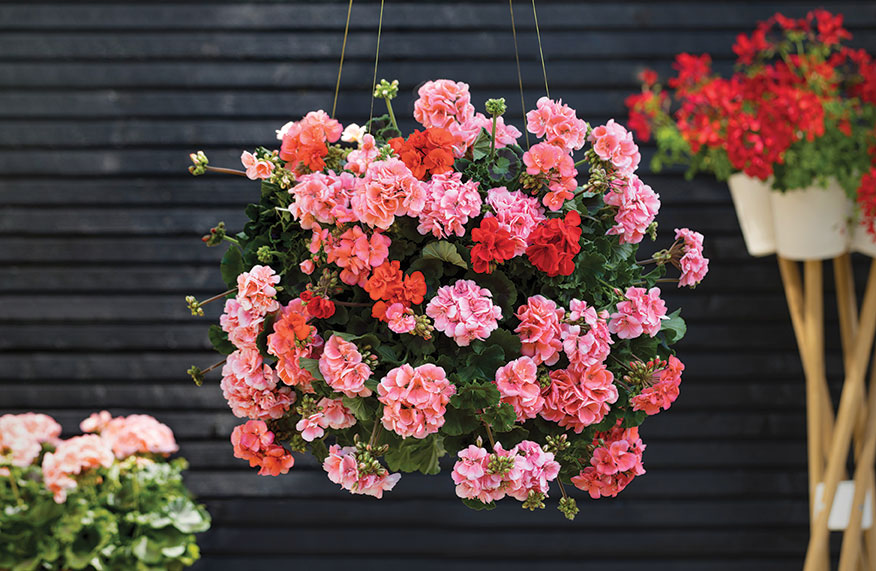
In a shady position, ferns look great, but I do love fuchsias – nothing beats the colourful show they put on for so many months from spring till autumn. (My parents ran a plant nursery when I was growing up and they carried hundreds of varieties of fuchsia, and many work brilliantly in hanging pots. I still recall walking along the rows as a child and popping the buds.) You can’t beat geraniums for a sunny spot. ‘Big Red’ is my favourite, although a full basket of ivy geraniums is also spectacular, with glossy green foliage and colourful flowers for most of the year.
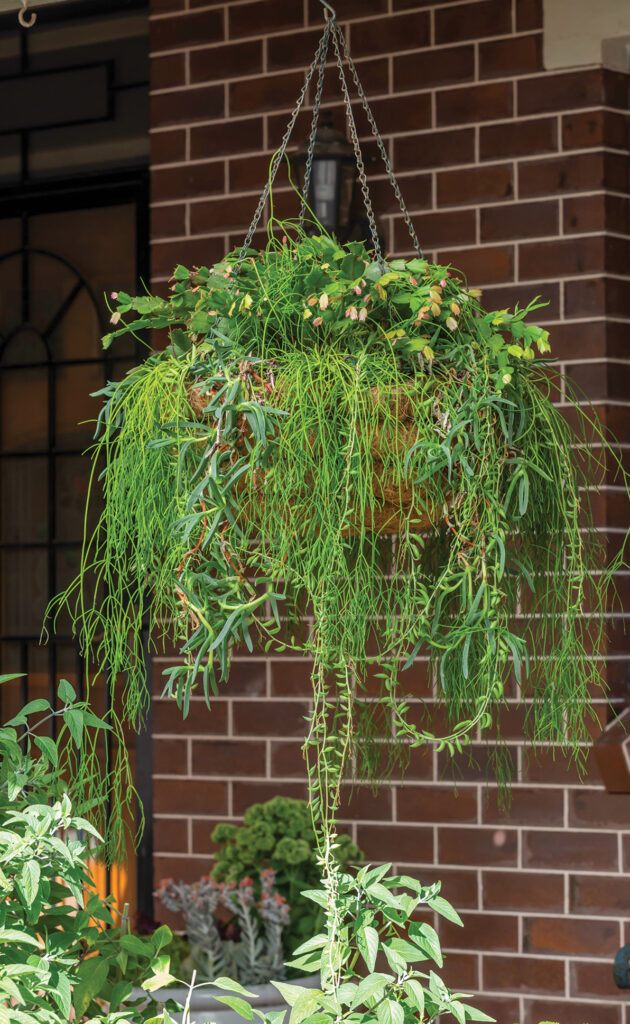
As a contrast, I love weeping succulents and cacti – from rhipsalis, donkey’s tail, string-of-pearls and chain of hearts to epiphyllums. Even bush foods such as pigface (Carpobrotus spp.) work well in hanging pots.
Q. What’s the key to successfully grouping plants?
When growing multiple plants in the one pot, choose a combination of trailing plants to hang down the sides and more upright plants to fill in the middle. Plants with strappy leaves are a great addition for the contrast of forms. Don’t choose plants that grow massive as they will outgrow the capacity of the pot.
Q. What are some of your favourite plant combinations?
When making combos, I like something full and bushy in the centre and something weepy around the edge. Centre plants could be the ‘Big Red’ geranium in a sunny position or Plectranthus ‘Mona Lavender’ in semi-shade. Groundcovers such as native violets, dichondra, bacopa and Veronica ‘Oxford Blue’ can then be added around the edge and look amazing, hanging like a curtain. Add a few strappy plants such as dianella, society garlic or liriope, and you can even squeeze in a few annuals for some short-term bling.
Q. Your favourite type of hanging pot/basket?
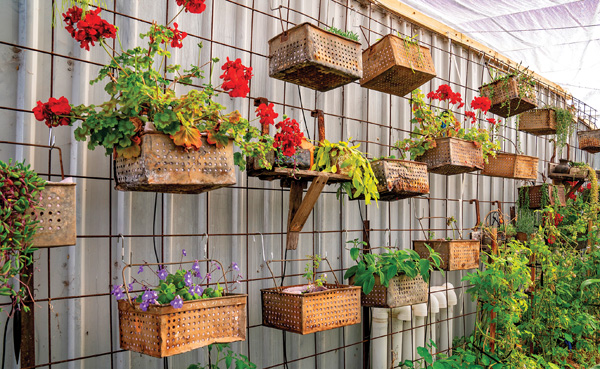
I love quirky pots and have a series of old dip tins [metal buckets formerly used in the grape-growing industry] which I use as hanging baskets. However, since they dry out readily, I need to grow hardy plants such as geraniums or succulents in them. While I do also love the look of coir-lined baskets, self-watering baskets work best in my harsh climate in South Australia.
Q. Tips for care and watering?
Hanging baskets dry out quickly so be sure to water them often – daily or even twice a day in hot, dry summer climates. Be prepared to feed them regularly, too, as the frequent watering will flush out nutrients. We see the glorious baskets hanging in the streets in the UK and forget that they are refreshed or replanted annually, so be sure to check if your plants need a zhoosh.
Header image courtesy of Pelargoniums for Europe